網站可能被牆,請記住以下域名:subhd.me subhd.one

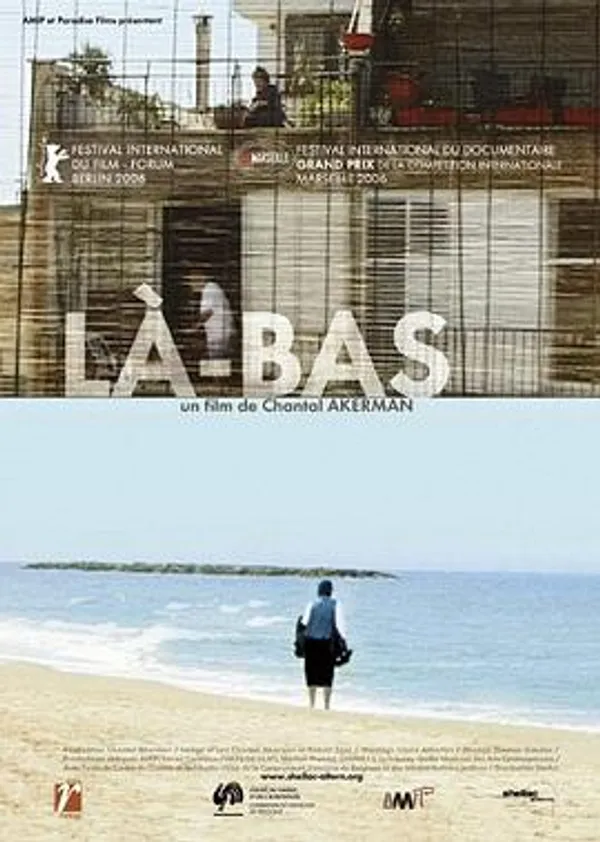
那里 Là-bas (2006)

电影 比利时 法国 法语 英语 纪录片

豆瓣
807
IMDb
252
片源版本
那里.Down.There.AKA.La.Bas.2006.1080p.WEB-DL.AAC.2.0.x264-aTroCiTy-Chs&Eng
最後更新:
發佈人:
總共發佈過字幕 57974 条
字幕僅作語言學習之用,版權歸片方所有
字幕文件
隨機片段預覽
转载自@LeoGrande2
翻译说明

本中文字幕结合原片内封字幕(英语部分)及内嵌字幕(法语部分)翻译校订。字幕为ass格式,部分电脑自带播放器或网盘在线播放可能无法正确显示,请下载后使用PotPlayer/VLC(Windows)或IINA(Mac)等播放器加载。由于资料和外语水平有限,字幕可能存在细节错漏,如有发现请向我们反馈,或在遵循CC协议的前提下自行修改发布。


匹配资源版本:
Down.There.AKA.La.Bas.2006.1080p.WEB-DL.AAC.2.0.x264-aTroCiTy


翻译 | veronica
校对 | Stout
發表留言 共 0 条 求资源发资源及吵架内容一律删除

名称:那里
又名:Down There
年代:2006
类型:纪录片
语言:法语 / 英语
国家:比利时 / 法国
导演:香特尔·阿克曼
编剧:香特尔·阿克曼
剧情:The Belgian filmmaker spent a period of time, unspecified, a week or two, in an apartment in Tel Aviv that was lent to her. She lived there alone, in virtually complete isolation, indirectly filming and narrating the experience, sustained only by "provisions" found in the kitchen, especially rice and carrots, having had stomach trouble from an Israeli salad; didn't go to cafes or supermarkets, and rarely even went out, except for a couple of forays to the sea; the apartment was a block or so from the beach.   La-bàs is a series of long stationary shots out the windows, often showing figures of old people on balconies on the roof or buildings opposite. A woman, immobile, is tended to by her husband. One man sits for long periods motionless. Ackerman in voice-over says she thinks he's watching his plants grow. "But I don't think plants grow any faster in Israel," she says.   Is this any better than the proverbial watching paint dry? Two aspects, visual and auditory, save this thin, dry, austere documentary from being a sterile art piece and make it both thought-provoking and haunting, for those who have the patience to sit through it; many will not.   To begin with, screens filter the light of the windows in a beautiful way: the shots are often handsome, not unworthy of something by Hou Hsiau-hsien or Tsai Ming-liang, if without their human figures moving about.   Further, Ackerman's voice overs, spoken off-camera during the shots, though skimpy, provide fleetingly penetrating, brutally frank self-revelations and contexts that range from the personal to the universal. Her father was once going to emigrate to Israal just after WWII and was waiting in Marseille to go, but he was warned that the Palestine environment was too harsh. The family settled in Belgium instead. She speaks of an aunt who committed suicide. Is she herself depressed? She speaks of passivity and laziness. She may be agoraphobic. She clearly is going through an agoraphobic period. She may also be afraid of bombs. A parent calls and expresses concern about her going out to dangerous places; she promises she won't. She speaks of prisons, external and self-imposed: this is one of the latter kind.   People call and invite her out. She says she can't because she's working. This devotion to the enterprise makes something positive and substantial, even noble, about this otherwise evanescent, uncertain project. This is an act of painfully heightened self-consciousness, a self-examination, a journal both Zen-like and intensive. She also speaks of reading; making extensive notes; having "complex" thoughts. A certain ambivalence toward her Jewishness is also involved. Finally, with minimal means, Ackerman has forged something unique.   A telling image: a Chasidic family leaving the beach. The man, in his quaint outfit, symbolizes the oddity of the Israeli enterprise. Ackerman doesn't comment on the oppression of Palestinians or Israeli dependence on the US. Her seclusion in the middle of Israel's largest city may be comment enough. This is something she apparently can't be a part of. But in her alienation, she couldn't be more Jewish.
Title:Là-bas
Year:2006
Genre:Documentary
Language:French / English
Country:Belgium / France
Director:Chantal Akerman
Actors:Chantal Akerman
Plot:Akerman spends a month in Tel Aviv, in an apartment by the sea, contemplating her family, her Jewish identity and her childhood.